All plants /Tree /Black Walnut
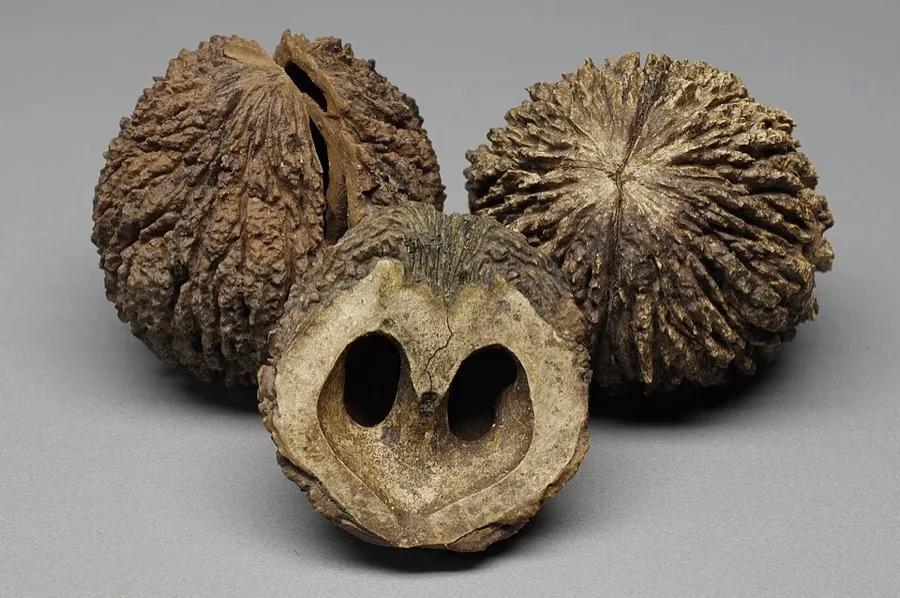
Black Walnut
Juglans nigra, walnut family. Common in East and Central Texas.
At a glance
- What
- Nuts inside green tennis-ball husks
- How
- Raw or baked; strong, wine-dark flavor
- When
- September through November
- Where
- Creek and river bottoms
- Value
- Fat, protein; assertive flavor
Caution: Husks stain hands, clothes, and driveways a permanent brown; glove up. The shells are famously hard, so think vise or hammer, not nutcracker.
Harvesting
Gather green balls off the ground early, before the husk blackens into dye. Stomp-roll the husks off, wash the nuts, and cure them in mesh for two weeks.
In the kitchen
Half the people who meet black walnut love it forever; it is pecan's loud cousin, best where it can lead, in ice cream, fudge, and banana bread.
Photo: Berthold Werner, CC BY-SA 4.0, via Wikimedia Commons.
Forages well with
Forage safely. Never eat a wild plant on this site's word alone. Confirm identity with several sources, learn the look-alikes, and when in doubt, leave it in the ground.