All plants /Cactus /Prickly Pear
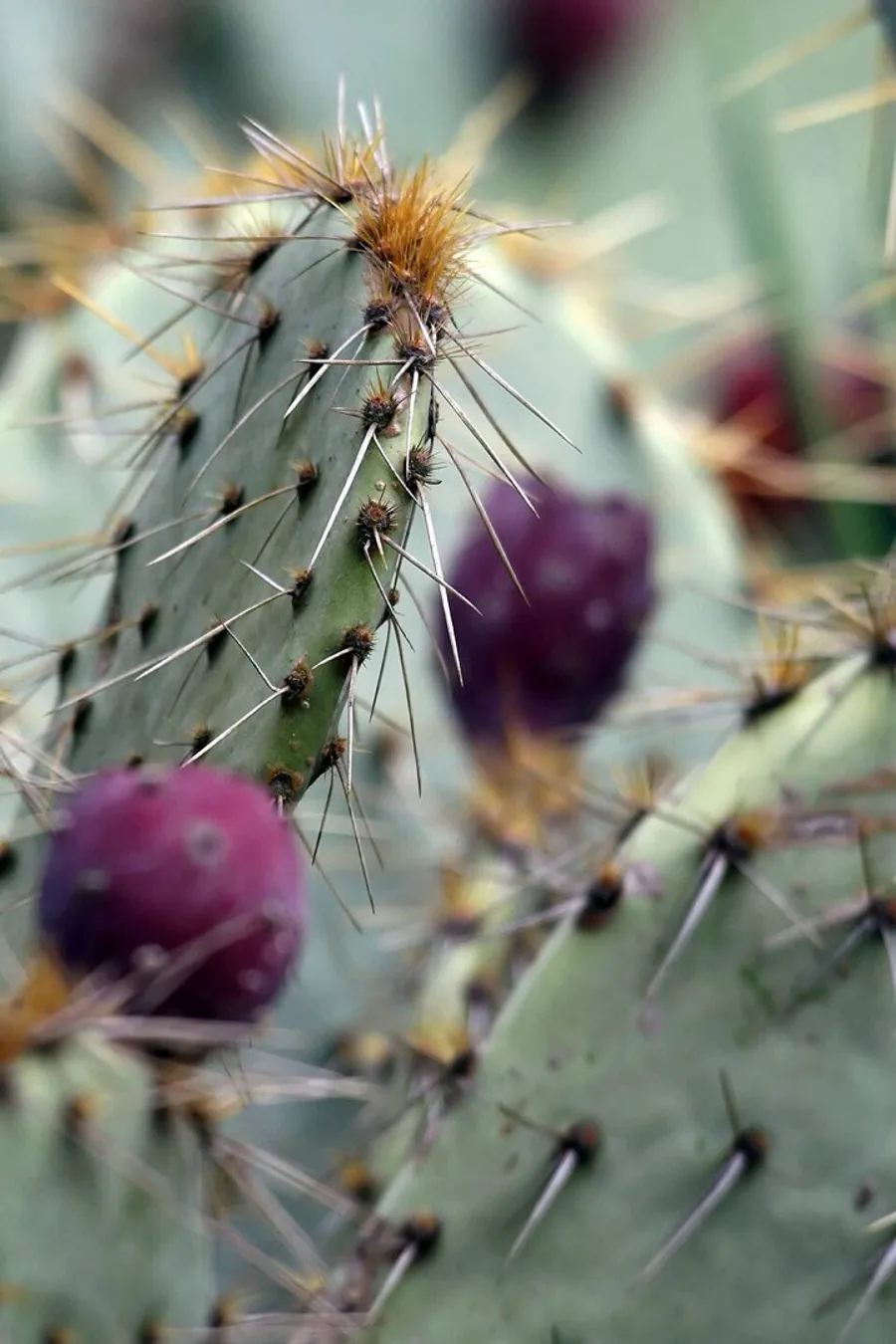
Prickly Pear
Opuntia engelmannii, cactus family. Abundant in West and Central Texas.
At a glance
- What
- Red fruit (tunas); young pads (nopales) in spring
- How
- Fruit raw, juiced, or as jelly; pads grilled or boiled
- When
- Tunas July to September, pads in spring
- Where
- Dry ground statewide, thickest in the west
- Value
- Sugars, fiber, vitamin C
Caution: The hair-fine glochids are worse than the big spines. Tongs, thick gloves, and a flame to singe them off are not optional.
Harvesting
Twist tunas off with tongs into a bucket and never touch them bare-handed until they are singed or peeled. For nopales, take bright young pads in spring and slice off every eye.
In the kitchen
Tunas peel into a magenta fruit that juices beautifully; strain the seeds. Nopales grill like a vegetable and pair naturally with eggs, onion, and chile.
Photo: Photo by David J. Stang, CC BY-SA 4.0, via Wikimedia Commons.
Forages well with
Forage safely. Never eat a wild plant on this site's word alone. Confirm identity with several sources, learn the look-alikes, and when in doubt, leave it in the ground.