All plants /Tree /Black Cherry
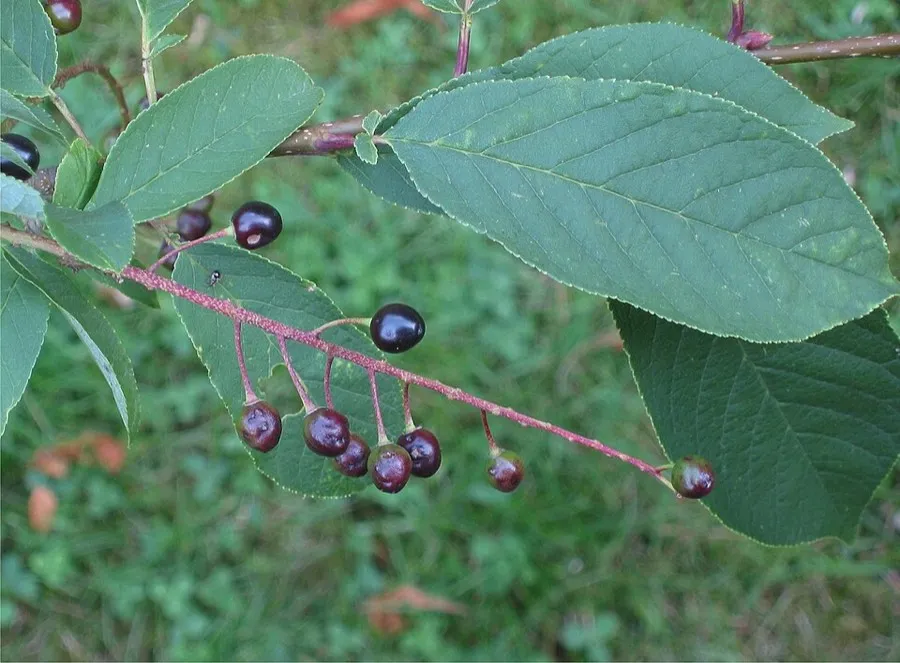
Black Cherry
Prunus serotina, rose family. Common in East and Central Texas.
At a glance
- What
- Small dark cherries
- How
- Cooked into syrup, jelly, wine; raw sparingly
- When
- Midsummer
- Where
- Woods and fence rows across the eastern half
- Value
- Sugars, antioxidants
Caution: Ripe fruit is fine, but the pits, leaves, twigs, and bark all contain cyanide-forming compounds; never chew the seeds and keep the greenery out. Never eat a wild plant on this guide's word alone. Confirm identity against several sources and learn the look-alikes first.
Harvesting
Fully black cherries are sweet with a bitter-almond edge. Strip whole clusters and expect to lose half the weight to seeds.
In the kitchen
Cooked and strained, black cherry becomes a deep, aromatic syrup that was the original flavor behind old-time cherry sodas.
Photo: Wikimedia Commons contributor, CC BY-SA 3.0, via Wikimedia Commons.
Forages well with
Forage safely. Never eat a wild plant on this site's word alone. Confirm identity with several sources, learn the look-alikes, and when in doubt, leave it in the ground.