All plants /Vine /Maypop
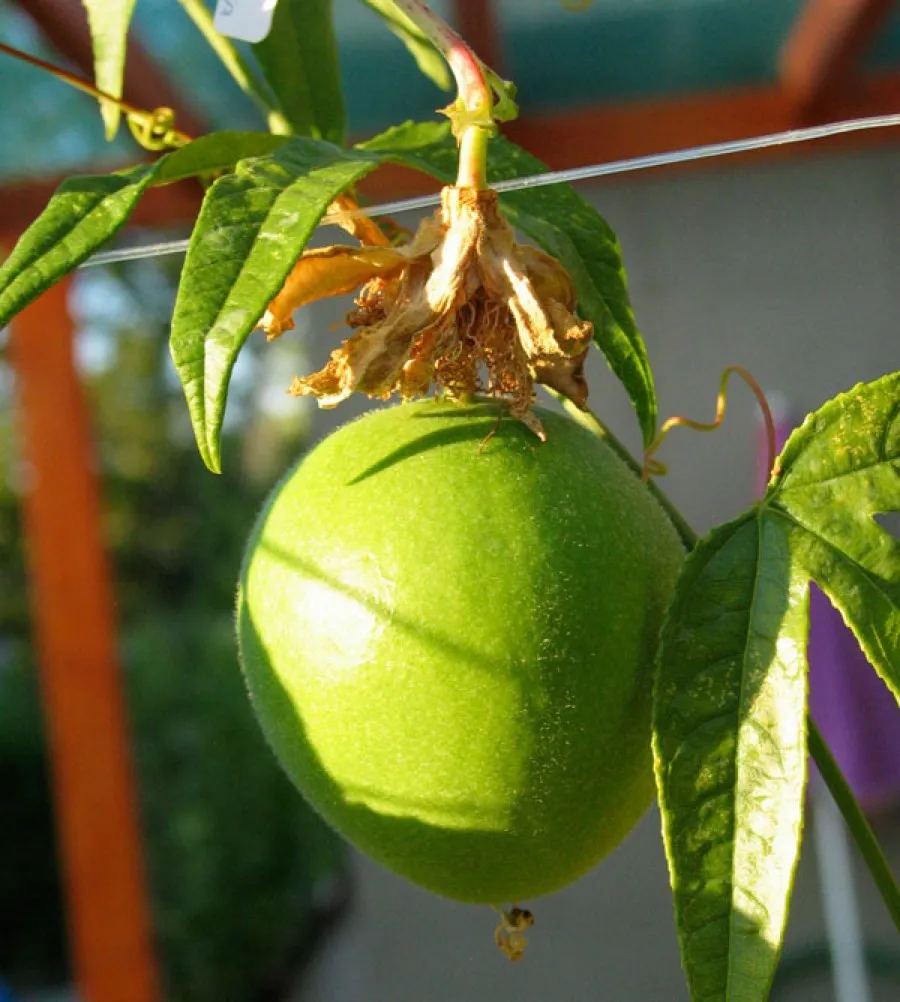
Maypop
Passiflora incarnata, passionflower family. Common in East and Central Texas.
At a glance
- What
- Egg-sized green fruit; leaves for tea
- How
- Ripe pulp raw; dried leaves as calming tea
- When
- Late summer
- Where
- Fence rows, fields, roadsides
- Value
- Vitamin C; the pulp is fragrant and tart
Caution: Eat only the pulp of ripe (yellowed, wrinkling) fruit; green unripe maypops are unpleasant. Never eat a wild plant on this guide's word alone. Confirm identity against several sources and learn the look-alikes first.
Identification
The intricate purple-and-white passionflower is unmistakable; the fruit 'pops' underfoot when ripe, hence the name.
Uses
Scoop the sweet-tart seedy pulp straight from a ripe fruit. The dried leaves make a traditional mild, calming tea.
Photo: H3ini, Public domain, via Wikimedia Commons.
Forages well with
Forage safely. Never eat a wild plant on this site's word alone. Confirm identity with several sources, learn the look-alikes, and when in doubt, leave it in the ground.