All plants /Tree /Honey Locust
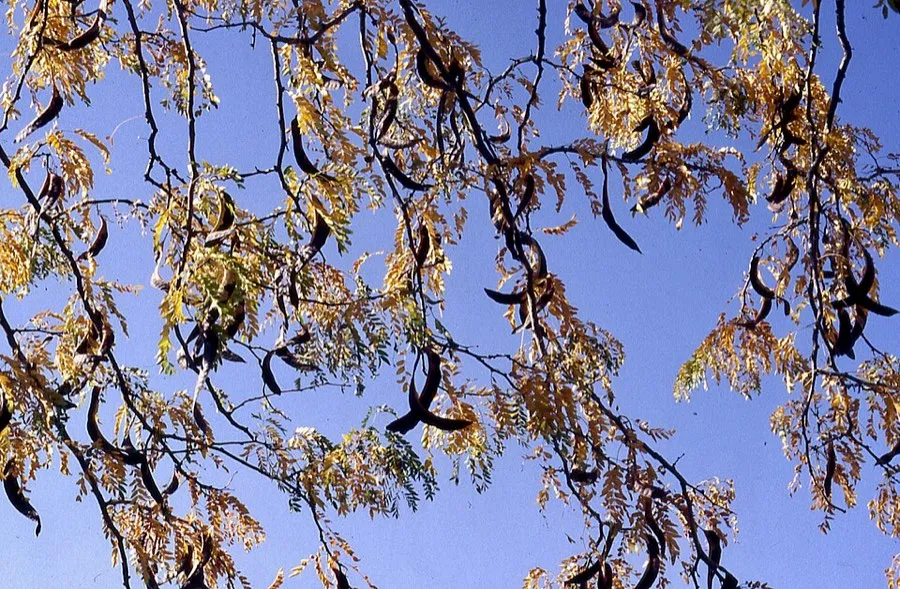
Honey Locust
Gleditsia triacanthos, legume family. Common in East and Central Texas.
At a glance
- What
- Sweet pulp inside long pods
- How
- Pulp eaten raw or dried and ground
- When
- Fall
- Where
- River bottoms and fence rows
- Value
- Sugars
Caution: Eat the sweet pulp, not the hard seeds. Do not confuse with the toxic black locust: honey locust has long twisted pods with sweet pulp and fierce branched thorns. Never eat a wild plant on this guide's word alone. Confirm identity against several sources and learn the look-alikes first.
Identification
Foot-long twisting brown pods and, on wild trees, alarming branched thorns. Inside the pods is a sticky sweet pulp.
In the kitchen
The honey-sweet pulp can be scraped and eaten or dried and ground into a sweetener, much like mesquite.
Photo: Cbarlow, CC BY-SA 4.0, via Wikimedia Commons.
Forages well with
Forage safely. Never eat a wild plant on this site's word alone. Confirm identity with several sources, learn the look-alikes, and when in doubt, leave it in the ground.