All plants /Shrub /Flameleaf Sumac
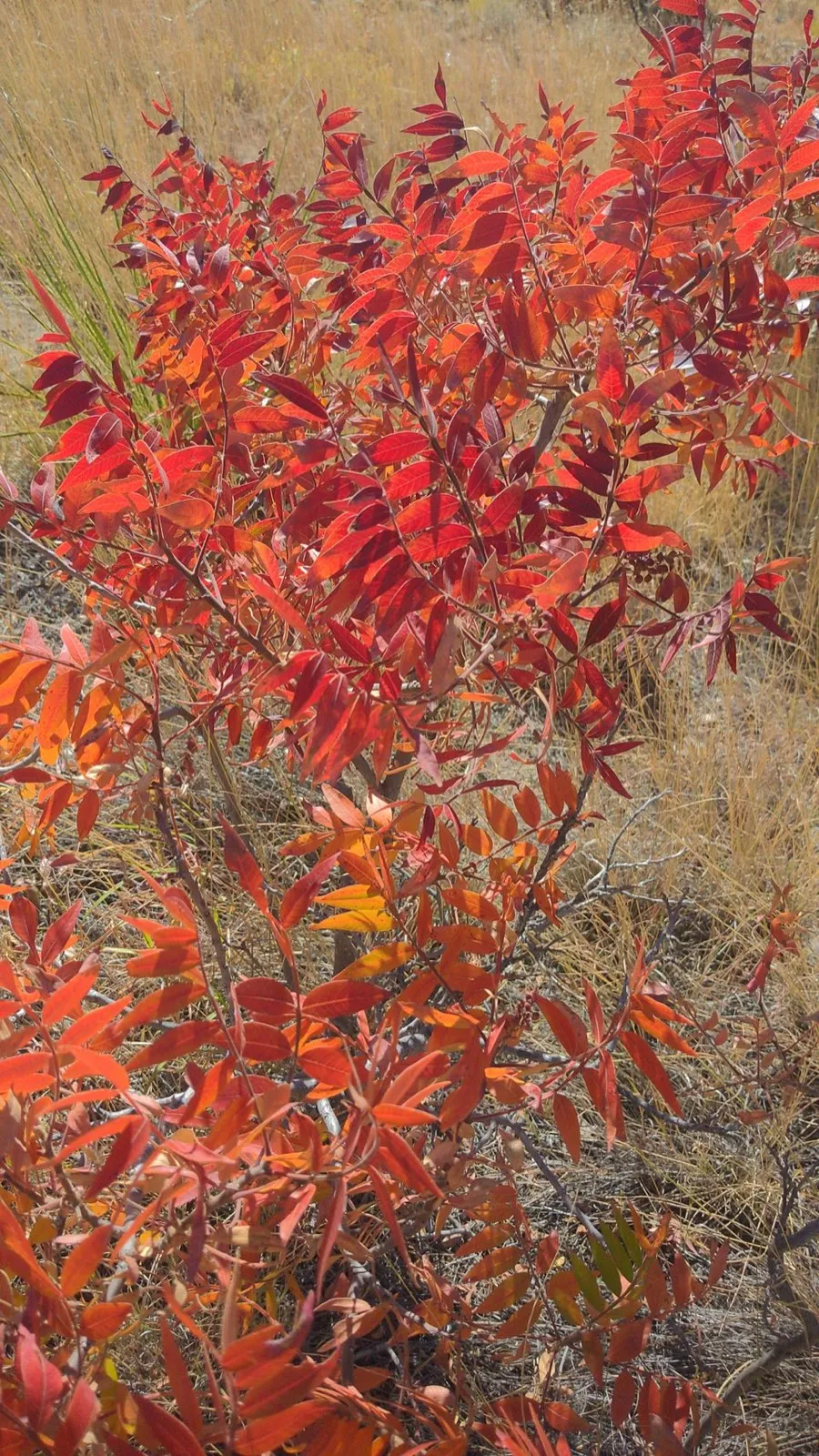
Flameleaf Sumac
Rhus lanceolata, cashew family. Common in Central and West Texas.
At a glance
- What
- Fuzzy red berry clusters
- How
- Cold-steep for sumac-ade; dry and grind for the spice
- When
- August through October
- Where
- Fence rows and rocky hillsides; scarlet fall foliage
- Value
- Vitamin C tang, malic acid
Caution: Cashew family: those with strong cashew or mango allergies should be careful. Poison sumac has WHITE berries and lives in swamps, not on Texas hillsides; red upright clusters are the safe signature.
Harvesting
Snip whole red cones on a dry day and taste first: rain washes the tang off, and it returns after a few dry days. Sour is what you want.
Sumac-ade
Swish clusters in cold water until it turns pink lemonade, strain through cloth, sweeten. Heat turns it bitter, so keep it cold.
Photo: Mike Tilley, CC BY 4.0, via Wikimedia Commons.
Forages well with
Forage safely. Never eat a wild plant on this site's word alone. Confirm identity with several sources, learn the look-alikes, and when in doubt, leave it in the ground.