All plants /Shrub /Elderberry
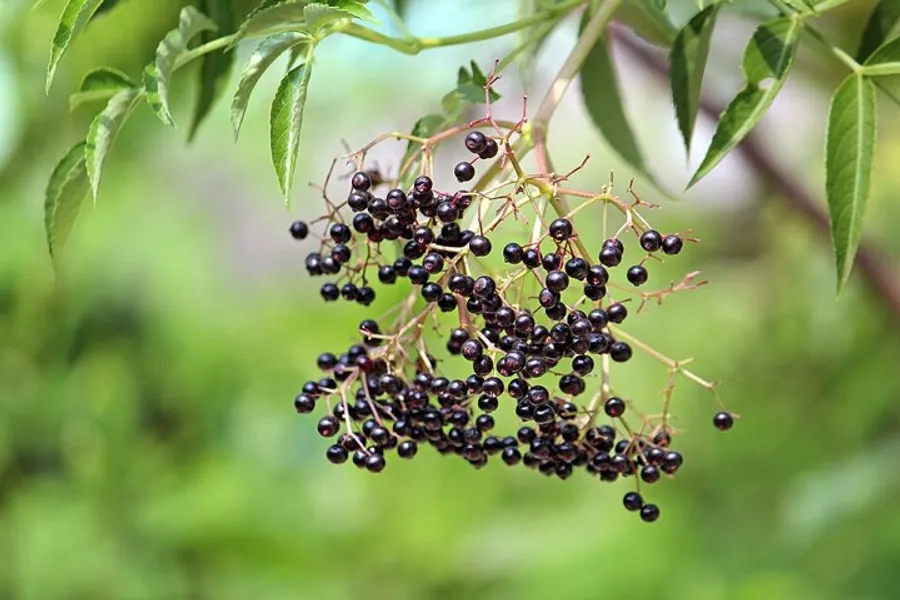
Elderberry
Sambucus canadensis, moschatel family. Common in East and Central Texas.
At a glance
- What
- Ripe black berries, cooked; flower clusters
- How
- Syrup, jelly, fritters from flowers; never raw in quantity
- When
- Flowers late spring, fruit June and July
- Where
- Ditches and creek banks with wet feet
- Value
- Anthocyanins; folk cold syrup
Caution: Cook the berries: raw fruit, and all stems, leaves, and unripe berries, carry cyanide-producing compounds. Strip berries fully from stems. Learn the shrub confidently in flower before trusting yourself in fruit.
Harvesting
Snip whole umbels of fully black berries and freeze them; frozen berries rattle off their stems in seconds, which beats an hour of picking.
In the kitchen
Simmered and strained, elderberries make the syrup half of Texas keeps in the fridge by November. The flowers, dipped in batter, fry into lacy fritters.
Photo: Rison Thumboor from Thrissur, India, CC BY 2.0, via Wikimedia Commons.
Forages well with
Forage safely. Never eat a wild plant on this site's word alone. Confirm identity with several sources, learn the look-alikes, and when in doubt, leave it in the ground.