All plants /Tree /Bur Oak Acorn
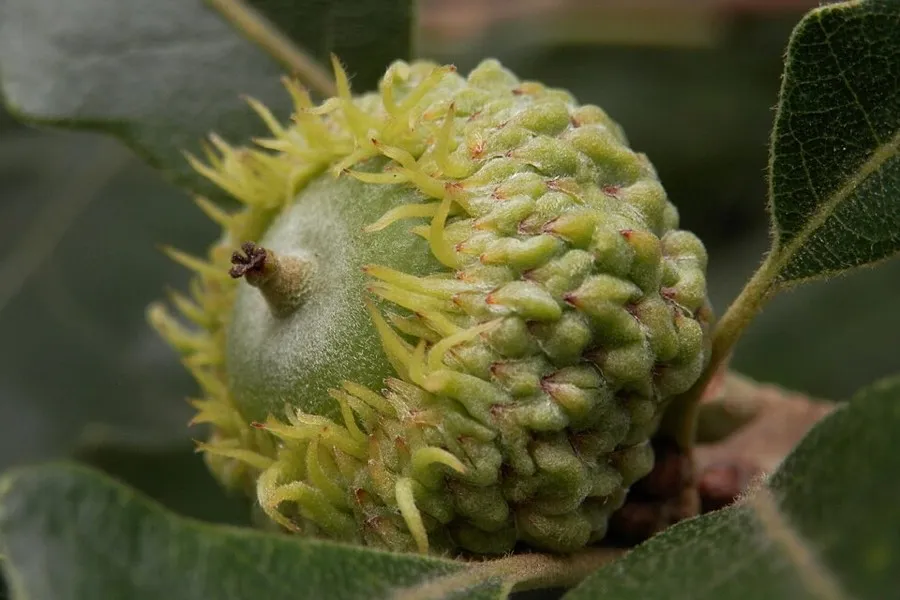
Bur Oak Acorn
Quercus macrocarpa, beech family. Common in Central and East Texas.
At a glance
- What
- Very large acorns
- How
- Leached, then eaten or ground to flour
- When
- Fall
- Where
- River bottoms and prairies
- Value
- Starch, fat
Caution: Leach out the tannins in repeated water changes until no bitterness remains before eating any acorn. Never eat a wild plant on this guide's word alone. Confirm identity against several sources and learn the look-alikes first.
Harvesting
Bur oak grows the biggest acorn of any Texas oak, capped in a shaggy fringe. Its size makes shelling and leaching far less tedious.
Leaching and flour
The lower-tannin acorns of white-oak-group trees like bur oak leach quickly. Grind the sweet result for baking.
Photo: Ryan Hodnett, CC BY-SA 4.0, via Wikimedia Commons.
Forages well with
Forage safely. Never eat a wild plant on this site's word alone. Confirm identity with several sources, learn the look-alikes, and when in doubt, leave it in the ground.